District Analysis 2026

Doha’s Digital Topography

In the heart of Qatar’s capital, 5G signals behave with the complexity of water—flowing freely across the open Corniche yet refracting sharply against the mirrored glass of West Bay's soaring financial district. Our guide dissects the urban corridors where connectivity shifts from seamless to sporadic.

Request Site Audit
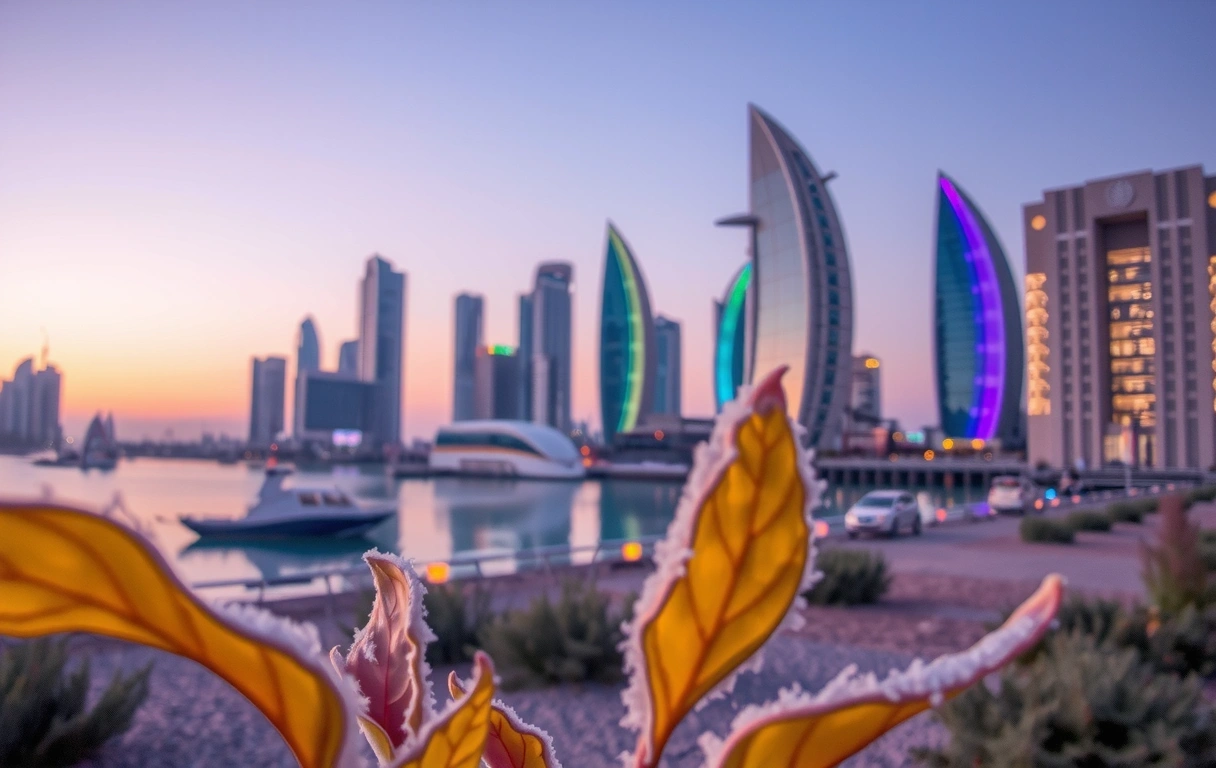
Doha Digital Skyline

"West Bay towers act as massive signal reflectors, creating 'shadow pockets' at street level despite high proximity to macro sites."

Doha Signal Archetypes

01 High Density

West Bay Financial

Ultra-fast mmWave availability near tower entrances. However, signal penetration in internal elevator cores and LEED-certified glass offices drops significantly, often triggering 4G-LTE fallback.

Glass Tower Detail
02

The Corniche

Perfect line-of-sight performance. Ideal for outdoor streaming. Signal begins to degrade 400m inland toward the Diplomatic area.

Reliability 98% Outdoor
03

Msheireb Downtown

Smart-city infrastructure integration leads to excellent indoor coverage, though throughput can vary between retail and residential tiers.

Souq Waqif & Old Doha

The intricate lattice of narrow alleyways and thick limestone walls creates a "Multipath Effect." 5G performs exceptionally in open courtyards but fades rapidly behind heavy wooden doors and inside vaulted vendors.

  • High Alley Interference
  • Courtyard Signal Hubs
Traditional Architecture

Lusail Marina Overlay

Where new infrastructure meets the bay. High throughput consistency for mobile workstations and professional sailing data logs.

Peak
1.2 Gbps
Latency
14ms
Fallback
4G+

Field Notes: Signal Snags

Doha Metropolitan Area Observation Log

"Elevator shafts in high-rises are the primary point of failure for persistent data sessions during morning peak hours."

"Sandstorm conditions lead to a ~12% increase in packet loss on mmWave frequencies in the Lusail-Doha corridor."

The connectivity pulse of Doha is dictated by its verticality. In the West Bay financial cluster, base stations are often positioned atop low-rise structures or mid-level terraces to direct signals toward pedestrian walkways. However, for those on upper-floor corporate suites, the 'antenna down-tilt' means you may be connecting to a cell miles away in Dafna rather than the one directly beneath your window.

Scenario Vignette: The West Bay Professional

An expat architect conducts a 4K video walkthrough from the 42nd floor of a glass-walled tower. Despite 'full bars' showing on their iPhone, the session lags. The culprit? Signal reflection off the neighboring tower's K-Lite coated glass and the lack of an in-building DAS (Distributed Antenna System). The recommendation: Switching to 5G Home Broadband positioned 2 feet further from the window to reduce multipath interference.

The High-Density Trade-off Frame

Navigating Doha's 5G landscape requires an understanding of what we sacrifice for speed. In high-density districts, the network is robust but strained by sheer device volume.

01
Peak Capacity vs. Latency Spikes

During 18:00 - 20:00, expect latency to rise from 15ms to 45ms. Mitigation: Use fiber-backed Wi-Fi for gaming during these windows.

02
Indoor Speed vs. Outdoor Reliability

Deep indoors in Doha Malls, 5G can plummet by 70%. Mitigation: Look for ceiling-mounted small-cell repeaters near major retail nodes.

03
Battery Consumption vs. Bandwidth

Constant 5G hunting in older districts like Najma drains devices 20% faster. Mitigation: Manually lock to 4G when in known congestion zones.
Doha Infrastructure

The Executive Summary

Doha's 5G network is no longer a luxury but an invisible utility. Coverage is near-ubiquitous in public spaces like Al Bidda Park and the Doha Port waterfront, yet remains vulnerable to the specific architectural physics of the city's private vertical spaces.

Key Takeaway (Distilled)

West Bay signal quality is dependent on your altitude—neither ground level nor sky-high is guaranteed. Mid-building (floors 5-15) typically finds the cleanest 'Sweet Spot' for 5G stability without the multipath pollution of street-level traffic.

Navigation Constraints

Our analysis is based on aggregated independent field tests. Local conditions change based on carrier backhaul upgrades and municipal construction.

Assumption Boundaries

  • Test results assume flagship-tier devices (2024-2026 models) with modern antenna arrays.
  • Indoor results fluctuate between residential towers depending on double-glazing thickness.
  • Network priority is often given to government and diplomatic bands during national events.

What Invalidates This Guide?

  • Sudden urban densification (new towers) blocking existing macro line-of-sight.
  • Extreme climate events (humidity >90%) causing temporary signal attenuation.
  • Carrier hardware transition phases (switching vendors or spectrum bands).